“Our dog will drink/until the ocean’s gone”
Kristian Matsson, The Tallest Man on Earth
As humans, we all have this dog; the animal inside of us with an insatiable hunger for doing something until we cannot do it anymore. It could be grinding away at a 9-5 we hate until our bones are visible, drinking away afternoons and blacking out before the sky does, ravishing our phone screens with our fingers until people in our small towns just know too much to look at us the same way, or gorging ourselves on just enough fried food to make our arteries clog and our hearts stop.
When it comes to fly fishing–and sure, other hobbies, but I am not writing about those–that hunger is stretched from ideas that can be inoculated quite easily to others that are harder to kick. Not all of them are unhealthy, and really most aren’t, but the addiction can hit hard if you are not ready for it. One rod leads to another. A trip to the fly shop for a handful of Adams could have you taking home a backpack full of various caddis, nymphs, and–god forbid–squirmy worms. But the worst one to me is when I find a honeyhole so sweet, so full of rises to the dry, that I am drawn back to it multiple times a week to get that oh so gratifying tug on my fly rod.
At first read, that might not sound like the worst thing. There are fish and I know it, they eat whatever I throw at them, and sometimes a brookie comes out that is long and plump enough that I don’t mind frying it up at home. But as Proverbs 25:16 states ever so wisely: “Hast thou found honey? eat so much as is sufficient for thee, lest thou be filled therewith, and vomit it.”
That honeyhole of mine, while producing fish all summer, slowly went from the place I caught a trout every cast in June to the hole that I really had to work my dry, possibly with a nymph dropper, to even get a nibble by the start of August. It was a hole where it seemed like the fish had never seen a hook in their life to the hole where the trout smell me coming from a mile away, lay down their newspapers, sigh and lock the door. Were there other creeks with equally good holes I could spend my time in around the county? Yes, plenty of them. But when obsession hits, I cannot take my mind off of it, and this leads to over-fishing on a personal level.
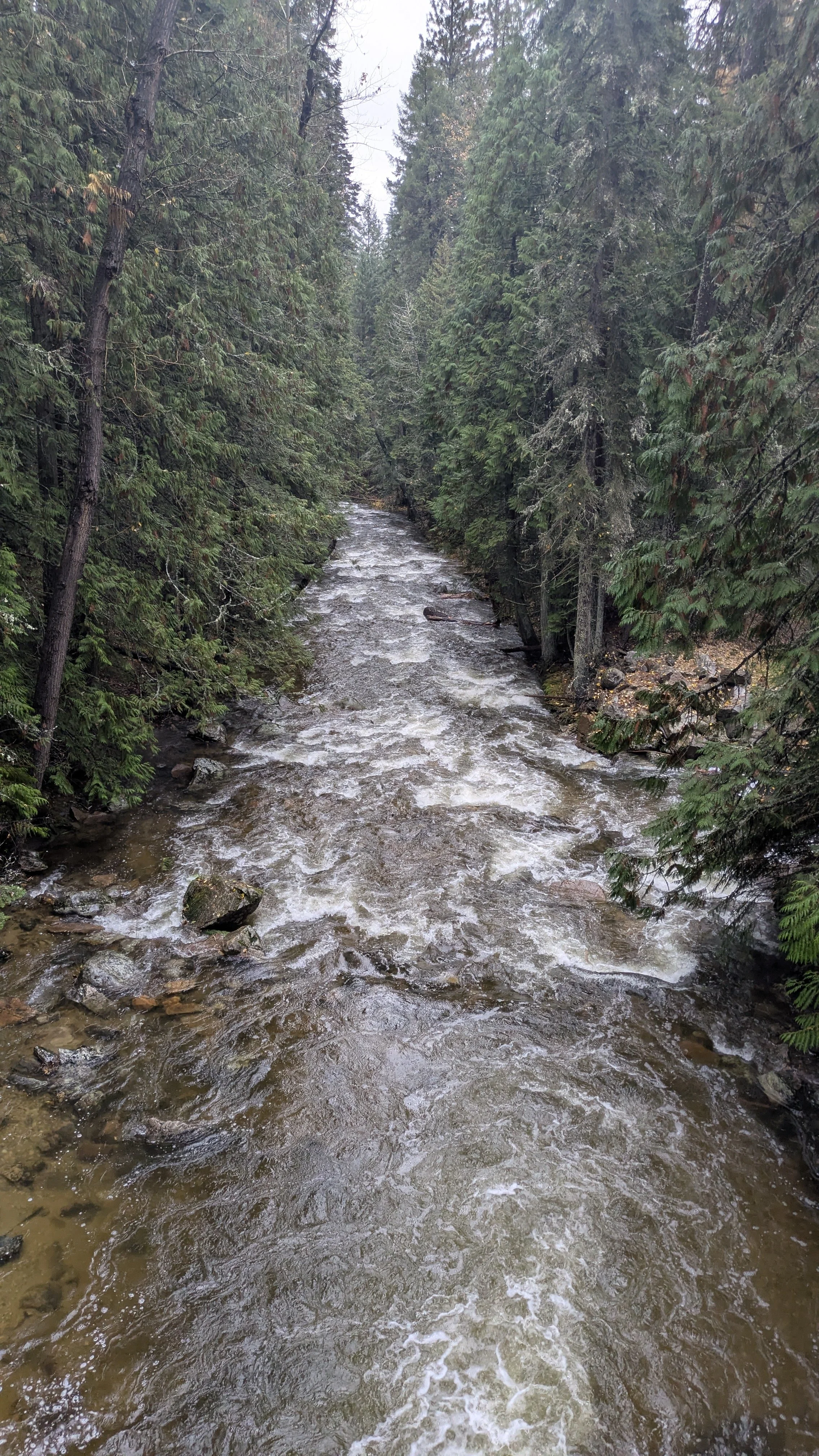
Now, there are other factors to take into consideration without putting full blame on myself. As the summer continued and the temperatures rose, the snow pack (what little we had this year) was long gone and while we got a decent amount of rain this year, it still wasn’t enough. The creek dropped levels quite drastically, but for a while the fishing was still red hot. This creek stays cold through the heat of the summer, and these deeper pools provide a good spot to hunker down for any trout (and a great place for the fly fisher to find the bigger trout in the creek). But this hole also can get slammed by swimmers during the weekend afternoons, dragged with treble hooked spinning lures (I personally pulled three out of one log in the pool this year along with another from a redcedar branch that I had caught on my back cast), and littered upon with food garbage, typical trash such as cigarette butts and nicotine pouches, and on one occasion, human feces. Each and every one of these things can erode a wonderful creek’s ecosystem.
One other thing I quickly want to go on a tangent about in terms of how we treat our streams is something I see at every single one of the creeks that I love that are a bit more popular with the summer recreational folks comes in the form of the natural propensity of stacking. Ever since we were but wee babes, we have been stacking things from blocks to boxes to books to cups, plates, cutlery. Small Smuckers jam containers at a diner were, and still are, my perfect building blocks. However, when it comes to spending time at the creek, stacking things around it is quite detrimental to the ecosystem. The rock cairn; an age-old marker for trails or landmarks or burial sites, yet also now used to provide satisfaction for the childhood stacker in us all. Some of you reading this will probably look at me as some fruity environmentalist type when I explain why shifting and stacking rocks at the creek or river is a horrible, terrible idea but I also bet that some of you reading this are ones who don’t have a problem with burning pallets at Sewer Lagoon or breaking glass bottles on the side of your bass boat. So read into this as much or as little as you want, but I for one am always looking at making our forests, lakes, streams, and plainly just our natural area around us better for my children, their children and others to enjoy.
Let me preface this first with saying that the phrase “Leave No Trace” should be something that any true Idahoan would keep in the back of their heads. By building cairns near a creek for no other purpose than to say “rock stack big, very big and tall rock stack” while dragging your knuckles across the ground back to the extremely lifted yet oddly very clean truck of yours, then obviously the proof of damage to a creek’s ecosystem might not matter too much to you. But if you are even curious about how something so seemingly trivial could affect an entire creekside habitat, let me explain.
Let’s get the hippie-dippie explanation out of the way first: local wildlife should be the ones shaping the environment they live in, not us. Disturbing the natural bottoms and banks of a stream or river can destroy animal habitat, and can end up being a direct cause of killing animals by removing these rocks. The rocks could be laid in such a way to improve stonefly hatches or other sub-aquatic nymph cycles, they could be nice hidey-holes for the small minnows and tadpoles to hide from predators, or moving them can just straight up can kill areas of micro-biodiversity for different bacteria or microscopic creatures or destabilize creek beds. Numerous state and federal wildlife organizations mention that it is an act of vandalism, and I wish personally that there was more action to prevent it.
Some might read this and think “what is one rock stack?”, which is similar to “what is one gum wrapper or cigarette butt?” Humanity in whole is quite the slave to trends: monkey see, monkey do.
But it goes even beyond the cairns. In Myrtle Creek, down a whimsical trail along the waters heading out towards the end of the trees and the start of the driving tour, there is a very wide and somewhat deep pool that has been a swimming hole to those who know about it for decades. There has always been a slight bit of a dam built at the end of it (which I am wholly against) that has always had a wide opening for the water to flow out. Yet, towards the end of this year as I went out fishing at that end of the creek, the pool was higher than it should be on approach and then I saw it: the dam was full across the creek and built about two feet taller than usual. While it was impressive to see how large it had become since I last was there, it was a harrowing sight to see. Not only was it time for the brookies and, more importantly, native bull trout to start spawning and now there was a large roadblock for them to get over if need be, but these rocks had to come from somewhere and that was a large chunk of creek rock to have been extracted and placed for something as dumb as a dam in the creek. As it was a bit rainy and cool that day and I did not have my waders (and limited time to get home before I heard it from the family all night) I removed a large section from the shore edge to let the waters flow and open up an area for the natural movement of fish and other creatures. And though I replace rocks in the water or the shoreline, I cannot heal the damage that has been previously done. Nature will have to step up and adapt themselves for the cards that they have been dealt.
Throughout the creeks and smaller rivers of North Idaho, and our county of Boundary, cairns and rock dams and the full circle pools of rocks haunt the waters. And while the average person will not see anything wrong with this, I hope that more people can learn enough to start caring about what they may be doing to the nature around us that we tend to take for granted. Do your part when you are out. Dismantle the many manmade rock formations around our waters, clean up trash even if it is not yours, think twice before you toss that banana peel out your car window (keep them away from your boat while fishing), and just try to be a bit more respectful to the nature that gives so much to us. I want those creeks to look the same, or better, when I am old and throw out my hip trying to wade out into them hoping that the big one in the pool will take my dry before the big one upstairs takes me away.
Tight lines out there, friends.