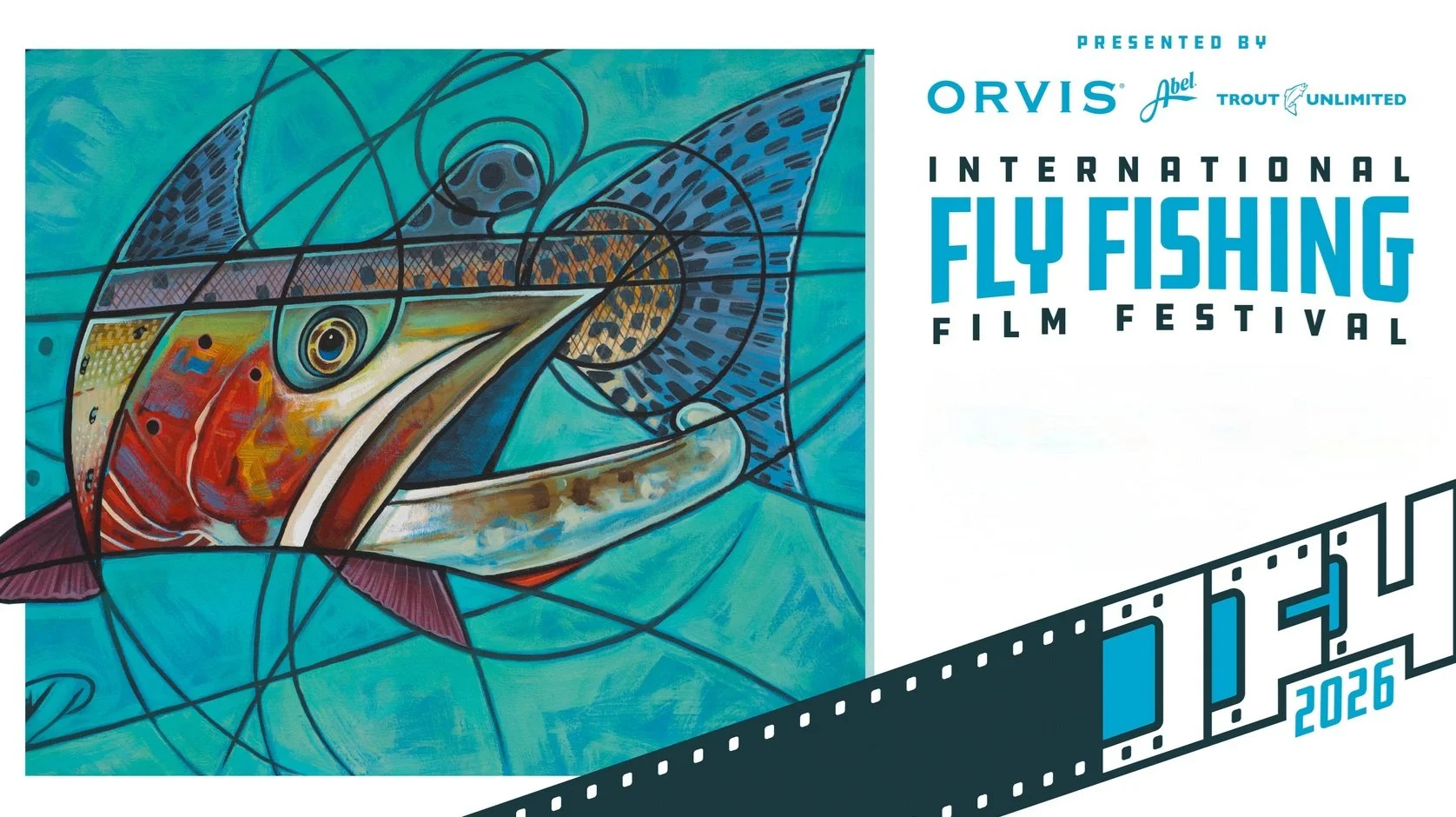
The lights lowered; the face of Brian Wimmer, owner of the fly shop at Sundance Mountain Resort and more famously the lead character of Doctor Bud Ricks from the nineties television show Flipper, filled the screen to fill us in on the films and themes of this year's International Fly Fishing Film Festival. Family, fish, fishing families. That was the gist; at least, that was what I think. The sound was quite low initially, and as they raised it to a good volume, there was a constant obnoxious speaker buzz during quiet sections of the film or between films like when the volume was raised, the house turned up the speakers but maybe could have raised the volume on the computer itself. However, that is not what I am here to talk about.
No, I did not have an existential crisis again like last year; in fact, my father’s old friends were absent this time. But, from what I could see, it seemed like The Pearl was a bit more filled this year. There were many groups of friends, families, acquaintances (maybe even some enemies) were gathered around to watch the regular hodgepodge of loud, bombastic overproduced saltwater yeehaw big fish films bookending the calmer, more introspective trout oriented films that typically fill out the middle section of the IF4 collection. But surprisingly, the selection wasn’t quite like that this year.
The films started with a man’s films that I absolutely loathe though: Helmut Zaderer. He is a big saltwater fisherman who goes around the world to catch large fish and hoot and holler about it. This year, he was after the marlin. While I can appreciate the fish he catches and the storytelling that the production company he runs with works in, what I can’t stand about it is the editing. Purely atrocious. If you have ever watched a Safdie Brothers movie, like Good Time or Uncut Gems (if you haven’t, I would highly recommend it), Helmut-starring films are edited just like one. Beautiful shots throughout but the films are full of quick cuts, slo-mo to fast film ramping, loud and ridiculous electronic music that all makes you feel anxious, uncomfortable, and tense. I get that fly fishing for large, even enormous fish, in the middle of the ocean is an exciting sport, but I feel like I shouldn’t be stuck between a panic attack and a seizure while I sit down to watch my little fishing movies. While it works well in a fictional crime movie made by the Safdie Brothers, it never lands for me in any sort of outdoor recreation film. A personal gripe, I understand, but I am sure I wasn’t the only one holding my temples, rubbing them, and repeatedly telling myself to just make it through these until the trout start appearing on screen.
The next film had me interested immediately though the editing, while toned down, was still in the same vein. It was a Simon Kay movie about the Tanzanian Tigerfish, the big toothy prehistoric monster that one wouldn’t really think about taking on a fly but after you see it, you kind of want to go try it. Vicious monsters, strong bites, and an engaging story. Too bad it was hard to hear it over the superbass’d out music choices, terrible mixing, and distracting snap zoom filmmaking. There were hints of environmentalist storytelling but the film could have warranted a bit of a slow down to explain more. The film did not have to be edited like an action movie.
The next film began with a gorgeous shot of northern British Columbia mountains, slow music, letting the initial scene breathe as the word “steelhead” was spoken. Here we are, bring on the trout. The story revolved around two women, April Vokey and Adrienne Comeau, unlikely fishing companions in anything but their love of fishing. The cinematography was mostly filled with steady landscape shots, slowed shots of flowing water, introspective interviews and narration, and one shot of an unreal fortyone inch steelhead that should make anyone in their right mind extremely jealous. It was a spey film which I hadn’t really seen at this film festival in a while, but one thing did bother me about it. While I loved it, there was really no point to it. There was introspection, humor, friendship, sure. But it ended and all I could think was, “that was beautiful but why was it made?” I could have missed something, or I could have blacked out after seeing that giant steelhead. Who knows?
The next film, The Only Boat on the Lake, started off with two brothers, a couple of plain dudes, fishing for small to medium sized bass on a family boat in a lake that their family had had a house on for decades. A wonderful little family film that really encapsulated the idea of fishing is just pure fun if you are doing it with people you care about. And then there was an emotional twist when it came to talking about their sister who, early on in life, had suffered a seizure in their family care, the first of many. And she had had her last seizure only a few years before the film was made. This is when you realize that it wasn’t just a couple brothers fishing for bass. It was a couple brothers coping with the loss of a loved one the best way they could. Honest, emotional, beautiful. I am not a big bass fisher, but easily my favorite film of the evening. It was the most human.
After that tearjerker came another salt film, and I dug my heels in the ground and my fingers into my temples until I heard the initial music play and a slow pan across the Bahamas flats which made me loosen up a bit. A calm saltwater film? At the IF4? With environmentalist undertones, and a steady storyline of how we need to teach the youth to fish to keep tradition alive and the waters clean? My lord, things changed and I loved it. The fish was the bonefish, but the entire subject was how to get the youth into the game when sportfishing is an important cultural aspect to their small community. More films like this, please.
A film by a guy named Ben Meadows followed. Ben is a fishing guy for striped bass in Maine in a fishery that is overfished, and spawning for striped bass had been failing since 2018, the same year that his daughter was born. A great little movie to watch, though sad, about how he fears his business failing and others failing if the fish completely stop being able to spawn, but also mainly fears that his daughter will not be able to have the same fishery in the future that he and her love at this moment. A touching film, close to heart when I think about the Moyie River up here, or the fact that a lot of Idaho rivers and tributaries are also overfished and undermanaged. I sympathize wholly with the vision of this film, and I believe that it is the most important thing to think about. Who cares about our experiences when we have children who might not be able to even have a small percentage of what we want? Isn’t the cliche of parenting that you want the world to be better for your kids than it was for you? I know there are quite a few boomer generation people who would say this quietly out of the corner of their mouth because they definitely don’t vote for a better world, but I feel like a lot of parents, anglers, and outdoorsmen could learn something from watching a personal experience film like this.
Following this absolute banger of a self-reflection film, we got a film about making fly fishing films from Ra Beattie as he takes chef David Chang to catch permit in Mexico, a son taking his ailing mother to catch her last salmon in Quebec (another beautiful, sad but rewarding film), a film about a young buck buying a fishing lodge in northern Canada with some waters that held insanely large char, a film about a couple good ol’ boys catching large brown trout in Patagonia, and a film about a South African son taking his father out fishing in Africa for some large fish in a very diverse waterway (along with a lot of shots of elephants).
But really, all I could think about was that Ben Meadows film. I kind of wish that the film festival ended with a film like this; a film that lingers with you for days and makes you question if you are doing enough for future generations, for your county and state, your rivers and streams, your friends and family. I am sure that everyone would honestly say that they don’t. I feel like I do quite a bit with volunteering, cleaning trash, informing the public, practicing good habits in the woods, teaching my children how to respect the land around us. But I could always do more. And so could you.
Tight lines out there, friends.